


Unified regulatory compliance data management and automation
Centralise regulatory data, automate workflows, and integrate seamlessly with your systems to support accurate, scalable compliance across reporting, monitoring, and risk operations.
AQMetrics’ Regulatory Compliance Data Management and Automation framework provides the foundation for all regulatory and compliance operations. It centralises data from multiple sources, automates validation and workflows, and integrates with existing systems through APIs, enabling firms to operate from a single, trusted source of regulatory data.
WHO WE WORK WITH

























Core capabilities of our Regulatory Compliance Data and Automation Framework

A single, trusted regulatory data foundation
Centralise regulatory, transactional, positional, and reference data from across the organisation into a consistent, governed data model. This provides a reliable foundation for reporting, monitoring and compliance operations without duplication or reconciliation across teams.
Why it matters: it helps eliminate fragmented data sources and reduces downstream errors.

Automation across the full regulatory lifecycle
Automate data validation, classification, calculations, and compliance workflows across reporting and monitoring processes. This reduces manual intervention while ensuring regulatory logic and controls are applied consistently.
Why it matters: it frees teams from repetitive tasks and supports scalable compliance operations.

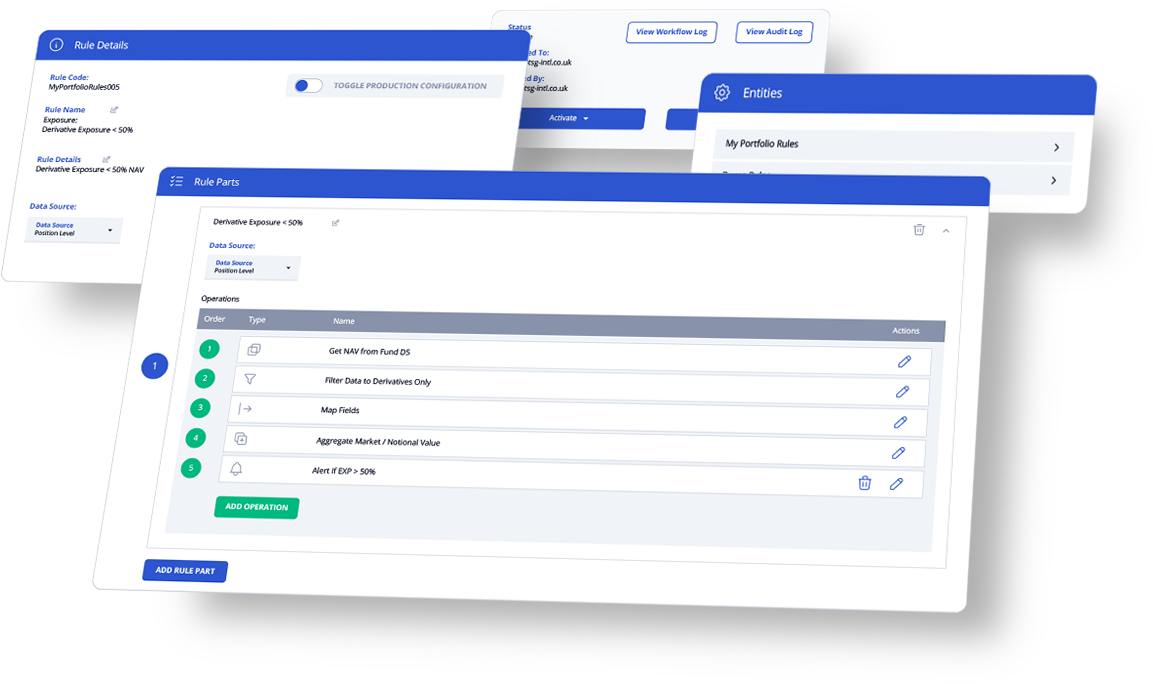
Configurable logic and workflows without re-engineering
Regulatory rules, thresholds, and workflows can be configured and maintained without redesigning core data pipelines or relying heavily on IT. This supports regulatory change, new use cases, and firm-specific requirements.
Why it matters: it helps avoid brittle, hard-coded solutions that slow change.

Built for integration, scale and auditability
The framework is designed to integrate with existing systems and scale across portfolios, entities, and jurisdictions, while maintaining full traceability. Every data change, calculation, and action is logged for audit and governance purposes.
Why it matters: it supports growth and regulatory scrutiny without adding operational risk.
OUR REGULATORY COMPLIANCE DATA AND AUTOMATION FRAMEWORK
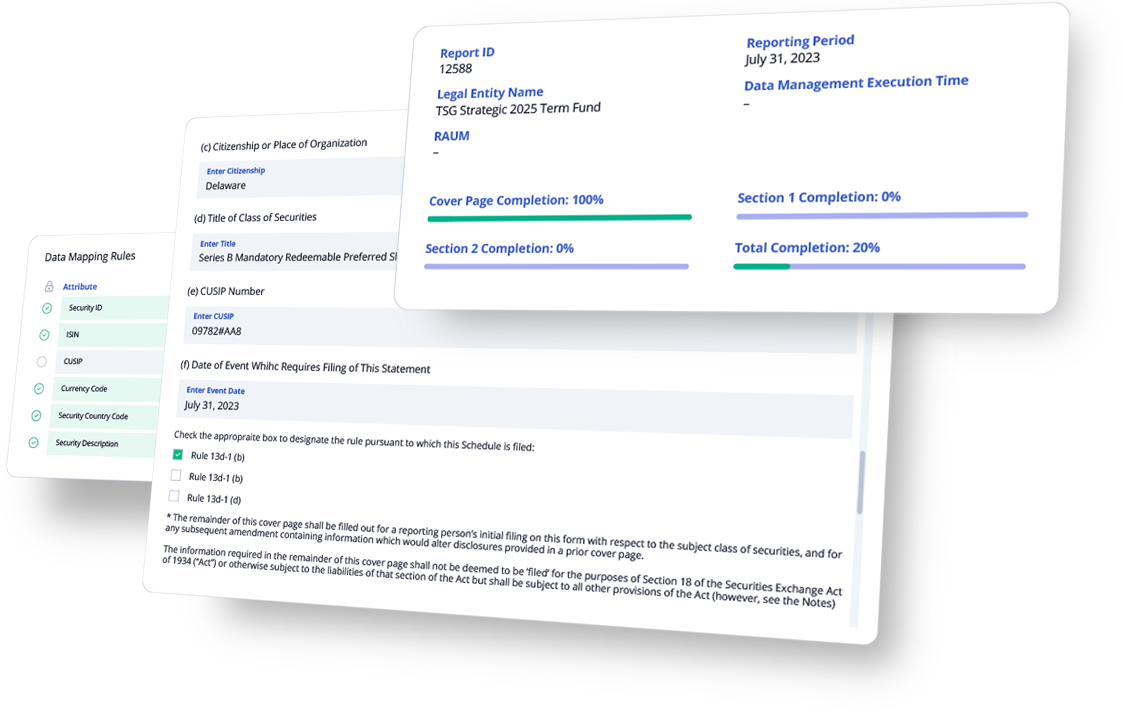
Regulatory compliance data management
Centralise regulatory, transactional, positional, and reference data into a single, governed data model. AQMetrics normalises data from administrators, internal systems, and third-party providers, creating a consistent foundation for reporting, monitoring, and compliance operations.
What this enables:
- A single source of truth for regulatory data
- Reduced reconciliation and manual intervention
- Consistent calculations across use cases
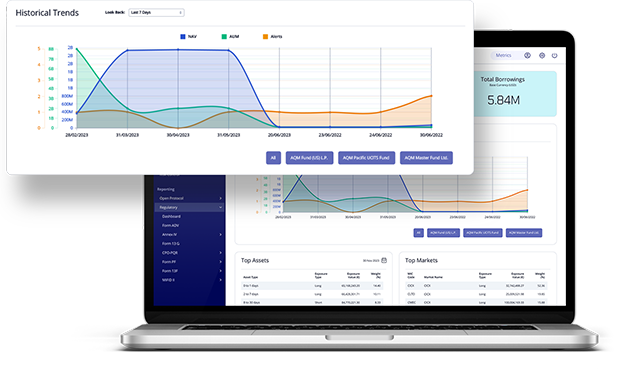
Workflow automation
Automate regulatory and compliance workflows from data ingestion through review, approval, and exception handling.
Configurable workflows ensure the right teams are involved at the right time, with full visibility and accountability.
What this enables:
- Structured review and approval processes
- Faster issue resolution and escalation
- Clear ownership and operational control
APIs & integrations
Integrate seamlessly with existing systems, data providers, and regulatory endpoints through robust APIs. AQMetrics is designed to fit into your current architecture, supporting both automated data feeds and flexible file-based ingestion.
What this enables:
- Faster implementation with minimal disruption
- Ongoing data synchronisation across systems
- Scalable expansion as requirements grow
Deprecated: Function Vc_Base::addPageCustomCss is deprecated since version 7.7! Use vc_modules_manager()->get_module( 'vc-custom-css' )->output_custom_css_to_page() instead. in /var/www/vhosts/abcdigital.ie/dev2.qikweb.com/wp-includes/functions.php on line 6131
Deprecated: Function Vc_Base::addShortcodesCustomCss is deprecated since version 7.6! Use Vc_Base::addShortcodesCss instead. in /var/www/vhosts/abcdigital.ie/dev2.qikweb.com/wp-includes/functions.php on line 6131
What our clients have to say
“We have been impressed with AQMetrics’ focus and commitment to regulatory reporting and are excited to partner with their team to enhance our services.”

Tyler Kim
Global Head of Fund Services
Maples Group
WHY AQMETRICS?
Why firms partner with AQMetrics for regulatory compliance data management and automation
Financial firms choose us to:
- replace fragmented data pipelines and manual workflows
- point integrations with a single, governed foundation for regulatory operations
- support consistent, scalable compliance across reporting, monitoring, and risk functions.
- team up with a regulated partner with higher governance standards and accountability
Key benefits of AQMetrics’ regulatory compliance data and automation framework
- A single source of regulatory truth that reduces reconciliation effort and ensures consistent outcomes across regulatory and compliance use cases.
- Reduced operational complexity: standardised workflows and automation replace bespoke processes and manual handoffs between teams.
- Greater control and transparency: every data change, workflow step, and decision is tracked, supporting governance, audits, and regulatory enquiries.
- Faster implementation and change: flexible ingestion, configuration, and APIs allow firms to onboard new data sources, rules, and requirements without re-engineering.
- Scales with growth and coverage expansion across portfolios, jurisdictions and regulations.
Our Regulatory Compliance Data and Automation framework is ideal for
Financial institutions that need a robust foundation for regulatory and compliance operations, including:
- Asset managers and fund managers with multiple data sources and service providers
- Investment firms and banks operating across jurisdictions and regulatory regimes
- Compliance, risk, operations, and technology teams responsible for regulatory data and workflows
- Firms moving away from spreadsheet-based processes or siloed compliance tools
- Organisations seeking to standardise data and automation across multiple regulatory use cases
FREQUENTLY ASKED QUESTIONS
AQMetrics' regulatory compliance data and automation framework centralises regulatory data from multiple sources, automates validation and workflows, and integrates with existing systems via APIs. This provides a reliable foundation for reporting, monitoring, and compliance operations, helping firms operate from a single, trusted data source.
AQMetrics supports seamless integration through robust APIs, allowing automated data feeds and flexible file-based ingestion. It fits into current architectures, connecting with data providers, regulatory endpoints, and internal systems effortlessly.
Financial institutions, alternative asset managers, investment managers and asset servicers seeking a strong foundation for regulatory and compliance operations use AQMetrics. It helps centralise data, automate workflows, and ensure accurate reporting and monitoring across various compliance activities.
Regulatory compliance data management involves collecting, normalising, and maintaining data required for regulatory reporting and monitoring. It ensures data accuracy, consistency, and accessibility to meet legal requirements efficiently.
Automation reduces manual effort, minimises errors, and speeds up data validation and reporting processes. It enables firms to maintain compliance more effectively and respond quickly to regulatory changes.
Centralising compliance data provides a single source of truth, improves data consistency, simplifies reporting, and enhances oversight. It streamlines compliance workflows and reduces risks associated with data discrepancies.
Deprecated: Function Vc_Base::addPageCustomCss is deprecated since version 7.7! Use vc_modules_manager()->get_module( 'vc-custom-css' )->output_custom_css_to_page() instead. in /var/www/vhosts/abcdigital.ie/dev2.qikweb.com/wp-includes/functions.php on line 6131
Deprecated: Function Vc_Base::addShortcodesCustomCss is deprecated since version 7.6! Use Vc_Base::addShortcodesCss instead. in /var/www/vhosts/abcdigital.ie/dev2.qikweb.com/wp-includes/functions.php on line 6131
Deprecated: Function Vc_Base::addPageCustomCss is deprecated since version 7.7! Use vc_modules_manager()->get_module( 'vc-custom-css' )->output_custom_css_to_page() instead. in /var/www/vhosts/abcdigital.ie/dev2.qikweb.com/wp-includes/functions.php on line 6131
Deprecated: Function Vc_Base::addShortcodesCustomCss is deprecated since version 7.6! Use Vc_Base::addShortcodesCss instead. in /var/www/vhosts/abcdigital.ie/dev2.qikweb.com/wp-includes/functions.php on line 6131